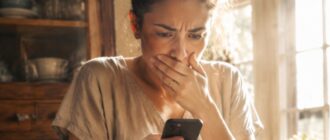
It took me months to convince my mother to walk — or rather roll — into a supermarket again after the accident. That day we only went for flour and apples, but a woman with a cart full of luxury groceries decided we were in her way — and the consequences came later.
I’m forty years old, and I still look at crosswalks like they’re loaded weapons.
Three years ago my mother, Maria, was hit at a pedestrian crossing by a driver who was looking at his phone. Since then she hasn’t been able to walk. The wheelchair didn’t just change her body — it changed how she believed people saw her.
She hates feeling like a burden.
So I usually do the shopping alone. It’s easier than watching strangers stare at her. I come home with bags and pretend not to notice how relieved she looks that she didn’t have to leave the house.
Last week she said:
“I want to come with you.”
I froze with my keys in my hand.
“To the store?”
She nodded, as if gathering courage.
“I miss choosing my own apples, Ellie. I miss feeling normal.”
We chose a weekday morning, when it’s usually quieter. Lark Market is our family store, though we don’t advertise that to everyone.
My mother put on her gray sweater and the scarf she calls her “public scarf.” I pushed her wheelchair slowly, as if the floor itself might bite her.
“Are you okay?” I asked.
“I’m fine,” she said — the way people say a lie they’ve practiced many times.
We picked up flour, apples, pecans, butter — everything for her favorite pecan pie. For a moment she even joked with me like she used to.
“Do we still have cinnamon?”
She made a face.
“Ellie, I have so much cinnamon I could embalm a body.”
I laughed, and she almost smiled.
That’s when the woman appeared.
She looked to be in her forties, dressed expensively and flawlessly, like someone who had never carried anything heavy in her life. Her heels clicked loudly across the floor.
Her shopping cart was overflowing — champagne, wagyu beef, caviar — everything looked like it belonged at a luxury party.
She didn’t even glance at the line.
She simply shoved her cart in front of my mother’s wheelchair so hard the front wheel twisted sideways.
My mother gasped sharply.
“Excuse me,” I said calmly, though my pulse was pounding in my ears. “The line starts back there. We were next, and my mom’s in pain.”
The woman glanced at the wheelchair, then at me.
She smiled coldly.
“I’m hosting a gala dinner tonight,” she said, checking her watch. “I don’t have time to wait behind people who take up extra space.”
The words hung in the air.
The cashier — a young woman named Maya — froze.
My mother squeezed my hand.
“Ellie… let it go.”
The woman began unloading her groceries like she owned the place.
“Ring them up,” she told the cashier. “Or I’ll call the owner.”
Maya swallowed nervously. She looked at my mother, then at me, and quietly pressed something under the counter.
A second later, the store speakers clicked on.
A deep male voice filled the supermarket.
“Attention customers and staff. Please direct your attention to checkout lane four.”
That was us.
The woman sighed impatiently, but then her expression changed.
“Today is a special day for our store,” the voice continued. “We’re celebrating my mother’s birthday.”
The woman froze.
My mother’s eyes widened.
“Oh no…” she whispered.
The voice continued:
“If you see Maria at checkout lane four, please wish her a happy birthday. She built this store with her own hands and heart. Happy birthday, Mom.”
The woman suddenly started speaking louder, as if trying to control the situation.
“This is harassment,” she snapped. “You’re pointing me out because I have somewhere to be.”
Then she gestured toward the wheelchair.
“Maybe you shouldn’t block the aisle with that thing.”
My eyes hardened.
“Don’t call my mother a thing.”
She grabbed a bottle of champagne and a jar of caviar from the conveyor belt and stuffed them into her purse.
Without paying.
“Some of us contribute to society,” she sneered. “Others just take.”
Then she walked out.
I took a step after her.
My mother grabbed my wrist.
“Don’t leave me.”
So I stayed.
A minute later my brother Ben rushed down the aisle.
“Mom? Are you okay?”
Maya explained what had happened.
“Did she pay?” Ben asked.
“No.”
Ben looked up at the cameras.
“Everything here is recorded.”
Then he checked the system receipt.
“She used a loyalty card.”
A name appeared on the screen.
Claire.
Later that evening we discovered something else.
Claire was hosting a huge gala dinner the following night.
And guess who was supplying the food.
Our store.
When we arrived at the event hall, she saw us immediately.
“What are you doing here?” she hissed.
“Delivering the food,” Ben said calmly.
That’s when my mother spoke.
“Look at me when you speak about me.”
Claire turned toward her, surprised.
My mother continued calmly:
“You shoved my wheelchair. You said I take up too much space. If you’re sorry — say it.”
Claire glanced around.
Guests were beginning to watch.
“I’m sorry… if you were offended.”
My mother shook her head.
“Try again.”
Finally Claire swallowed hard.
“I’m sorry. I’m sorry I hit your wheelchair. And I’m sorry I said you take up too much space.”
My mother looked at her quietly.
“Thank you.”
Then Ben added calmly:
“You’re banned from our store. You stole from us and assaulted our mother.”
Claire turned pale.
On the drive home, my mother stared out the window.
“I was terrified,” she admitted finally. “But I didn’t hide.”
The next day we baked pecan pie.
Her hands trembled slightly as she poured the flour.
She tasted a slice and closed her eyes.
Then she whispered:
“Some things are worth taking up space for.”
And this time, I completely agreed.