Our marriage had been one of those quiet, stable unions that others envy — until one day my husband suddenly moved to the guest room and began locking the door behind him. At first, I assumed it was because of my snoring… until I discovered what was truly happening inside.
I’m 37, married for eight years, and until about a month ago, I believed we were one of “those” couples. Ethan and I weren’t showy or overly romantic, but we were close. Or so I thought…

People described us as stable, calm, maybe even a little boring — in the good way. We finished each other’s sentences and knew exactly how the other took their coffee.
We lived in a cozy two-bedroom house with a small herb garden I constantly forgot to water. We had two cats, who acknowledged our existence only when hungry. Weekends meant pancakes, failed DIY projects, and half-watched Netflix shows we forgot about immediately.
We’d survived the trials that either bind couples forever or break them — health scares, two miscarriages, infertility struggles, job loss — and we’d made it through.
We always shared a bed, like every couple. So when Ethan moved into the guest room, at first I didn’t think much of it.

One evening he came to me with a shy smile and said, “Honey, I love you, but lately you snore like an industrial blower. I haven’t slept properly in weeks.”
I laughed. Really laughed. I teased him about exaggerating, and he kissed my forehead and carried his pillow to the other room, as if heading off on a short vacation. He said he just needed a proper night’s sleep.
I didn’t think twice. The next morning I even joked that he could bring me breakfast in bed. He smiled, but didn’t laugh.
A week passed, then a second. The pillow stayed in the guest room. Soon his laptop and phone joined it. Then he started locking the door at night.

Then things became strange.
I asked him why he was locking it, and he shrugged. “I don’t want the cats jumping around and knocking things over while I work,” he said, as if that were completely logical.
He wasn’t rude. He still hugged me in the morning, asked about my day. But everything felt… staged. Like a performance. Checking boxes. Even bathing in the hallway bathroom instead of ours.
When I asked why, he kissed my forehead and said, “Don’t worry so much, honey. I’m just trying to get ahead at work.”
But there was something in his voice. Something off.
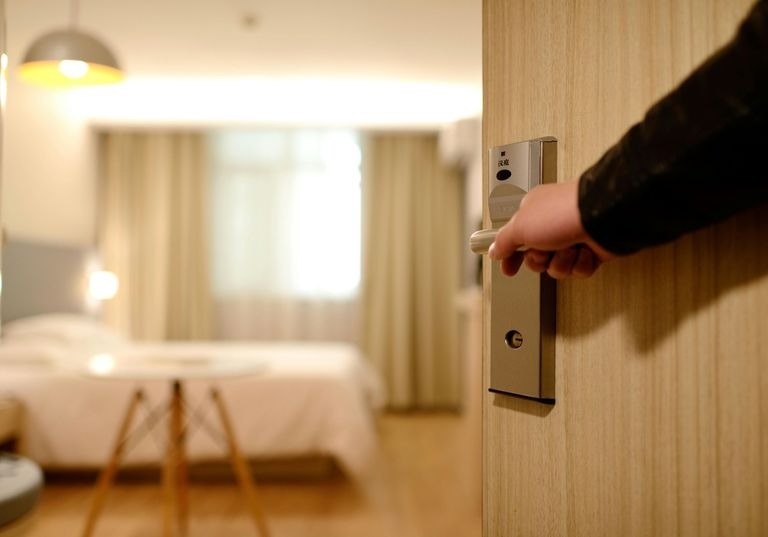
One night I woke around 2 a.m. His side of the bed was cold. A faint light glimmered under the guest room door. I almost knocked, but stopped. I didn’t want to seem paranoid.
The next morning he was gone. No breakfast together, no goodbye kiss — just a note on the counter: “Busy day. Love you.”
And every night was the same: “You were noisy, honey. I need proper sleep. Just until things settle.” He said it as if he was doing me a favor.
He claimed sleeping apart was “for his health.” “Just until I sleep better,” he repeated.
I felt uneasy. I didn’t want to be the reason he couldn’t sleep. I bought nasal strips, sprays, sleep teas, even slept half-upright with pillows. Nothing helped, according to him.

So he continued to sleep in the guest room.
But he wasn’t just sleeping there — he was living there.
Weeks into this, I began to unravel. I started questioning myself — had I changed? Did he no longer find me attractive? Was something wrong with me? Should I see a doctor?
I visited a sleep specialist without telling him. She suggested I record my snoring to track it.
That’s when I decided to set up a recorder myself.
It wasn’t for him — at first, at least. I just wanted to see if it was really that bad. I found an old voice recorder from my freelance days, placed it under the lamp next to the bed, and hit record.
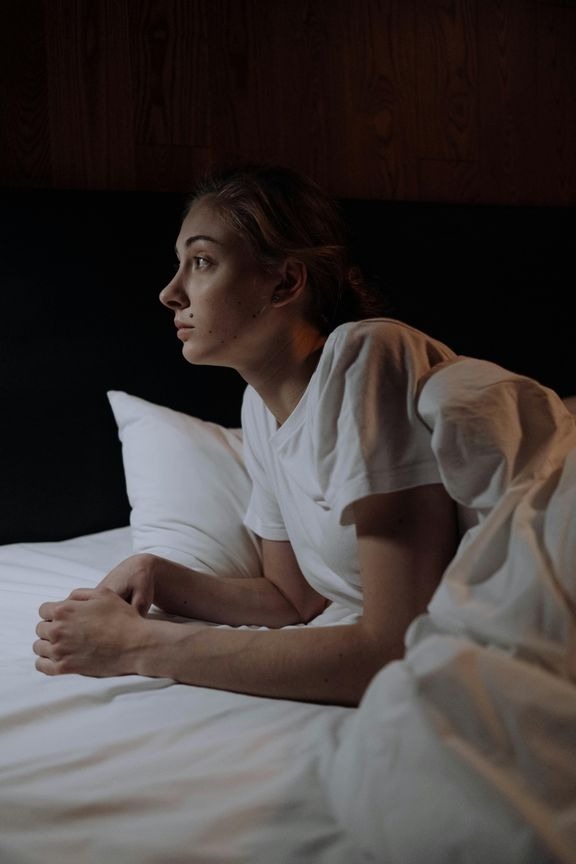
I whispered into the dark: “Let’s see what’s really happening.”
The next morning, I barely brushed my teeth. Heart pounding, I pressed “play.”
The first hour was silent — faint hum from the fridge, creaking wood. No snoring. No heavy breathing. I fast-forwarded — still nothing.
Then, at 2:17 a.m., I heard it: footsteps. Not mine. Slow, measured in the hallway, then the faint squeak of the guest room door.
I turned up the volume.
The chair creaked, a sigh, the sound of a keyboard.
I froze, listening as Ethan moved quietly in the other room, long after telling me he was asleep. Was he working? Watching something? Messaging someone?
But why lie? What was he doing at two in the morning, locked away?
The thought wouldn’t leave me.
The next day I watched him closely. His eyes were tired, but not from lack of sleep.
More from… stress. And perhaps guilt.
By evening, I convinced myself there had to be an innocent explanation. But the inner voice wouldn’t stop: “Then why the secrecy?”
When he grabbed his laptop and said, “I’m going to bed,” I replied, “Good night,” as always — but I set an alarm for 2:00 a.m. and waited.
When it rang, I moved as quietly as possible.
The house was cold. Yellow light glimmered under the door again. I leaned down and clearly heard typing. The door was locked.
Then I remembered something.
Three years ago, when we moved in, I made copies of all the keys. Hid them in a metal box behind the cookbooks in the kitchen. Ethan didn’t know about them.
My hands shook as I opened the drawer.

I stood before the door with the key in my palm. My heart pounded so loud I thought it would burst. I hesitated. What if I was wrong? What if this destroyed the little trust we had left?
Then I remembered the weeks of distance, the lies about snoring, the locked doors.
I deserved the truth.
I put the key in the lock.
It turned easily.
I opened the door just enough to peek inside.
Ethan sat at the desk, illuminated by the laptop screen. He looked exhausted. The desk was covered with papers and food boxes. His phone was plugged in.
But what froze me were the dozens of open tabs on the screen — emails, payment platforms, messages — and a photo of a boy, about twelve, smiling in front of a science project. My breath caught.
“Ethan?” I whispered.
He jumped, as if shocked.
“Ana? What are you doing awake?”
“I could ask the same. What the hell is going on?”
He stood abruptly, chair nearly tipping over.
“It’s not what you think,” he said, voice trembling. “I’m just catching up on a little extra work.”
“At two a.m.? Locked?”
“I can explain.”
“Then explain.”
He sat back down, seemingly defeated.
“I didn’t want it to happen this way.”
“How?”
He looked at me with tears in his eyes. “I lied. But not because I don’t love you. I love you, Ana. I just didn’t know how to tell you.”
“Tell me what?”

He slowly turned the screen toward me. The boy filled the display. Brown hair. Warm smile. Same dimpled chin as Ethan.
“Who is this?” I whispered.
His voice broke. “My son.”
The world seemed to collapse beneath me.
“I didn’t know,” he said quickly. “Thirteen years ago, I had a relationship with a woman named Laura. It wasn’t serious. We split. I moved. She didn’t tell me anything.”
“And now?”
“A few months ago she reached out. She’s sick. Autoimmune disease. Can’t work full-time. And she told me about Caleb.”
“Caleb…”
“We did a DNA test. He’s mine.”
I ran my hands through my hair. “So all the snoring stuff was a lie?”
He shivered. “I didn’t know how to tell you. After everything we went through… miscarriages, hormones, doctors… I didn’t want to hurt you more.”
“So you decided to hide a child?”
“I thought if I helped quietly, it wouldn’t affect our life. I work online at night — writing, editing — whatever I can find. I send money for school, medical expenses.”
I trembled. “You lied to me every night.”
“I didn’t want to hurt you.”
“You should have trusted me,” I said, voice breaking.
He stepped closer. “You are everything to me. I don’t want to lose you.”
I took a deep breath. “You almost did. But I’m still here. Now you choose — honesty or isolation.”
He nodded, tears streaming. “No more secrets.”
I sat in the chair and read the correspondence. Laura wrote about braces, school clothes. The tone was respectful, businesslike.
“What will you do?” I asked.
“She wants to meet. Caleb asks about his dad.”
“And you?”
“I think I should.”
I swallowed. “Then we’ll meet him. Together.”
His eyes widened. “You’ll agree?”
“I’m not okay,” I admitted. “But I won’t punish a child for something that isn’t his fault. If he’s part of his life, I will be too.”
Two weeks later, we went to a small library, where Caleb waited. He stood nervously with a backpack slung over one shoulder.
“Hi, Caleb,” Ethan said quietly.
“Hi,” he replied.
“This is my wife, Ana.”
“Hi,” I smiled warmly.

We spent the afternoon together. Lunch. He was smart, funny in that slightly awkward teenage way. Talked about robotics and programming.
And I realized something strange and beautiful — I was no longer angry. The pain was still there, but softened.
On the way home, Ethan held my hand.
“Thank you.”
“Families aren’t perfect,” I said. “But they have to be honest.”
That night, he didn’t go to the guest room.
He returned to bed.
No pretenses. No lies. Just two people in the dark, side by side.
“I’m sorry,” he whispered.
“I know. But promise me something.”
“Anything.”
“No more secrets. Whatever it is — together.”
He squeezed my hand under the covers. “Together.”
And in that quiet moment, I believed him.
Because love isn’t just comfort and habit. It’s staying when it’s hard, and choosing to rebuild amid the ruins.
Even when walls crack and trust wavers, the right kind of love heals.
And as I fell asleep with his hand in mine, I realized we were starting over.