It started with something small. Almost laughably small.
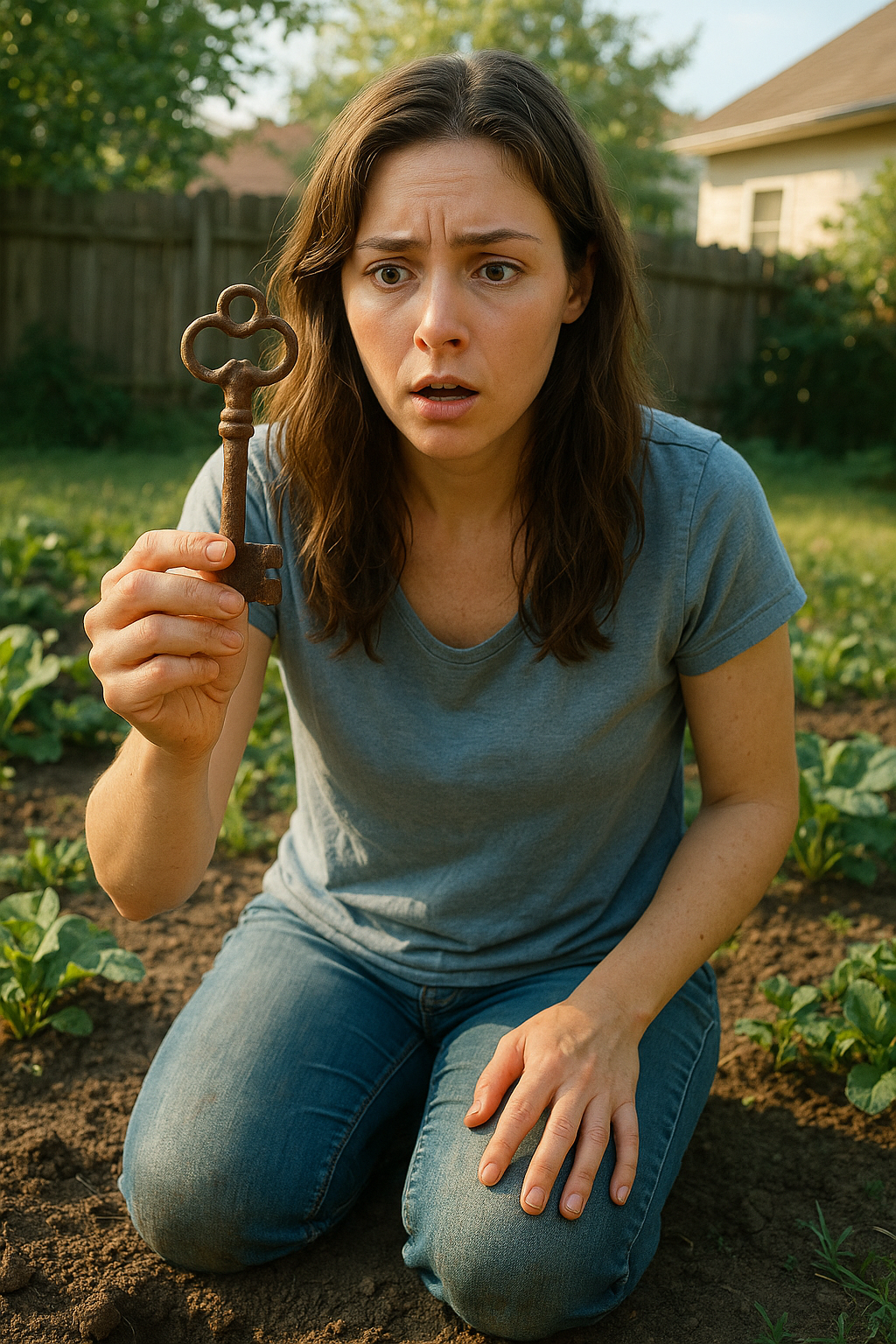
Claire was pulling weeds in her backyard when her trowel scraped against metal. At first, she thought it was just a bottle cap or a piece of old pipe. But when she dug deeper, she unearthed a key. Heavy, rusted, cold to the touch.
It wasn’t like any key she had ever seen. Not the sleek silver of house keys, not the brass of mailbox locks. This one was ornate—spirals carved into the handle, the teeth jagged and unusual. It looked ancient.
“Probably junk,” she muttered, slipping it into her pocket.
But something about it felt… wrong. Or maybe, too right.
That night, she couldn’t stop staring at it. She placed it on her nightstand, and every time she rolled over in bed, the moonlight seemed to glint off its rusted edges. At 3 a.m., she sat up, heart pounding, convinced she heard a faint click. But when she looked, the key hadn’t moved.
The next morning, Claire carried it to her neighbor, Mr. Hollis, who had lived on the street for fifty years.
His face drained of color the moment he saw it.
“Where did you get this?” he whispered.
“In my backyard. Why?”
He shook his head slowly. “I haven’t seen that key since the old Miller place burned down.”
The Miller house. Everyone in town knew the story. Decades ago, a fire had gutted the property, killing the reclusive couple who lived there. Whispers about hidden treasures, secrets locked away, even foul play, spread like wildfire. But the ruins had long been bulldozed, leaving only a cracked stone foundation hidden beneath weeds.
Claire’s backyard, as it turned out, bordered the old Miller lot.
That night, she couldn’t resist. With a flashlight in one hand and the key in the other, she crept into the overgrown lot. Her heart hammered as she stepped onto the crumbling stone foundation. She expected nothing. Maybe an old hinge, a cellar door long rusted shut.
But then she saw it: a trapdoor.
The padlock was ancient, its metal eaten with rust. Her hands trembled as she slid the key inside.
Click.
The sound was so sharp, so final, that she nearly dropped it. Slowly, she pulled the door open. A rush of damp, musty air escaped, carrying the smell of earth and smoke.
The flashlight beam caught stone steps leading underground. She hesitated—every part of her screaming to turn back. But she went down.
At the bottom was a small room. The walls were blackened from the fire, but in the center sat a chest. Wooden, charred, but still intact.
She turned the key again. The lock popped open.
Inside weren’t gold coins or jewels. It was worse.
Dozens of journals.
She picked one up, her hands shaking. The first page was dated 1962. The handwriting spidery, frantic.
“We should never have agreed. They said no one would ever know. But I can’t live with the guilt…”
Claire flipped through page after page, her heart sinking. The Millers hadn’t been reclusive because they were shy. They had been hiding something. Names. Dates. Payments. Bribes. Half the town’s founding families were mentioned, including her own grandparents.
It wasn’t treasure. It was evidence.
Her stomach dropped as she realized: the fire hadn’t been an accident. It had been a cover-up.
And now she had the key to the truth.
The next morning, Claire noticed something chilling. Her back gate, which she always locked, was wide open.
On her nightstand, where she had left the key, there was only an empty indentation on the wood.
Someone else had it now.
And Claire suddenly understood: some doors should never be unlocked.