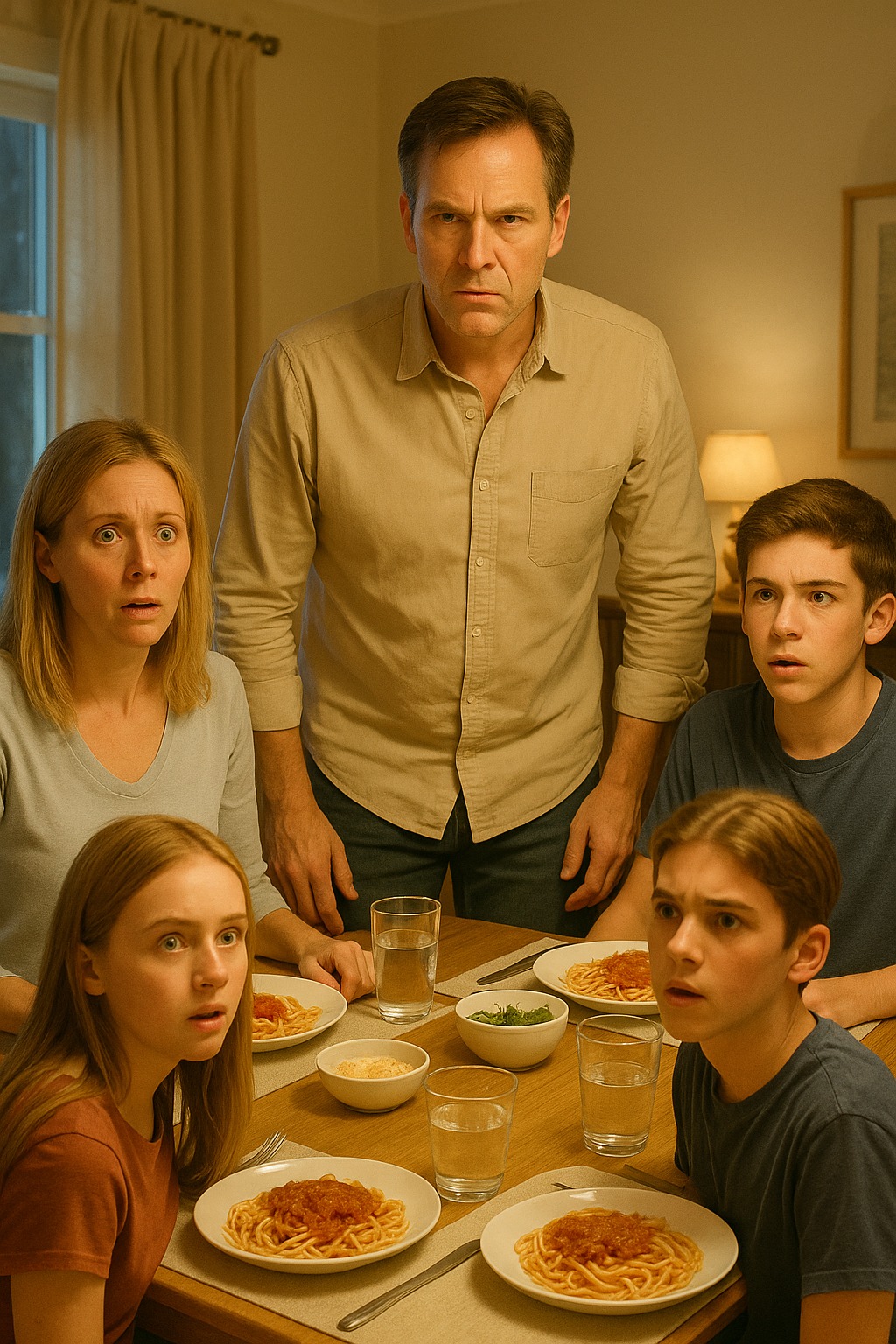
The Thompsons looked like the perfect family. Neighbors admired them: neat lawn, cheerful holiday cards, polite children. Every night, without fail, they gathered for dinner. To anyone looking in, it seemed idyllic.
But Emma, the daughter, always felt something was… off.
There were the silences. Long, heavy pauses where laughter should have been. Her father, staring into his glass instead of talking. Her mother, cutting her food into tiny pieces she never ate. Her little brother cracking silly jokes that no one answered.
Emma told herself this was normal. Every family had awkward dinners. Still, she couldn’t shake the sense that something unspoken hovered in the room like smoke.
Weeks turned into months, and the silences grew louder. Her father started coming home late. Her mother seemed permanently tired. Sometimes Emma caught her parents exchanging looks across the table—looks filled with something she couldn’t name.
Her brother noticed too. “Why does everyone look so sad?” he asked one night, his fork poking at untouched peas. Nobody answered.
Emma began to dread dinner. The clink of cutlery, the smell of roast chicken, even the glow of the dining room lamp—it all felt like the setup for something waiting to explode.
And then, one Friday night, it did.
The meal began like any other: food on the table, polite nods, silence. Emma picked at her plate, heart heavy with a tension she couldn’t explain.
Her father didn’t eat at all. He kept glancing at his wife, then at Emma and her brother, his jaw tight. Finally, with a sudden scrape of his chair, he stood.
Everyone froze.
He looked around the table, his face pale but determined. Then, in a low voice, he said seven words that Emma will never forget:
“I can’t do this anymore. It’s over.”
The words detonated like a bomb.
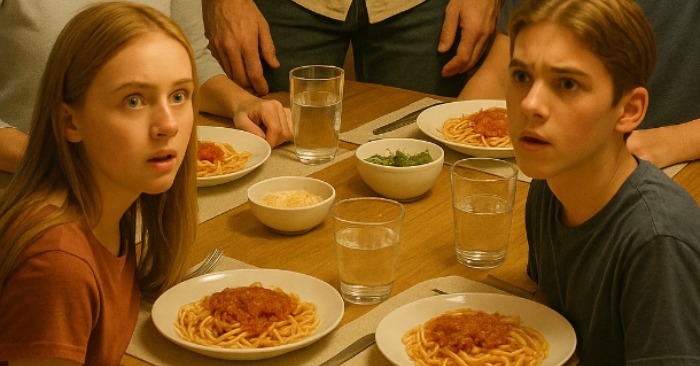
Her mother’s fork clattered to the plate. Her brother’s mouth fell open. Emma felt the floor tilt beneath her. Over? What did that even mean?
The truth came out in seconds, sharp and merciless. Another woman. A decision already made. A family breaking apart, not with shouting, but with a single sentence dropped into the silence of dinner.
For years, Emma had wondered why their meals felt strange. That night, she got her answer.
And as she looked at the faces around the table—her mother’s horror, her brother’s tears, her father’s grim resolve—she realized something chilling:
It hadn’t been silence at all.
It had been the sound of goodbye, building slowly, night after night.